Tetrahedron Vitiatum
The Corrupted Tetrahedron
2026
Projection Mapped Sculpture
Created with Mario Arsvita
SCAD Fine Arts Showcase 2026
Faculty Support: Matthew Robertson, Matt Van Rhys
Additional motion media: Chase Waldman, Danny Bostwick, Emily Spause, Gail Li, Howard Yang
This collaborative installation merges two visual languages through an eight-foot tetrahedron that evokes pyramids, monuments, and ancient artifacts. Its geometry is disrupted through rotation, displacement, and projection, transforming the form into a glitched artifact.
Projection-mapped motion media extends that disruption across the sculpture’s surface, combining physical distortion with digital imagery. The resulting work brings sculptural form, moving image, and each artist’s visual vocabulary into a single unstable object.
Installation View
SCAD - Alexander Hall Parking Lot
Design
The project was developed through a series of Blender studies exploring how a simple geometric form could be physically disrupted.
The final design reduced the pyramid to three large sections, each rotated independently. The middle and upper sections were also tilted and elevated on smaller cubic supports. Simplifying the sculpture allowed the disruption to occur through the primary geometry itself rather than through additional surface elements.
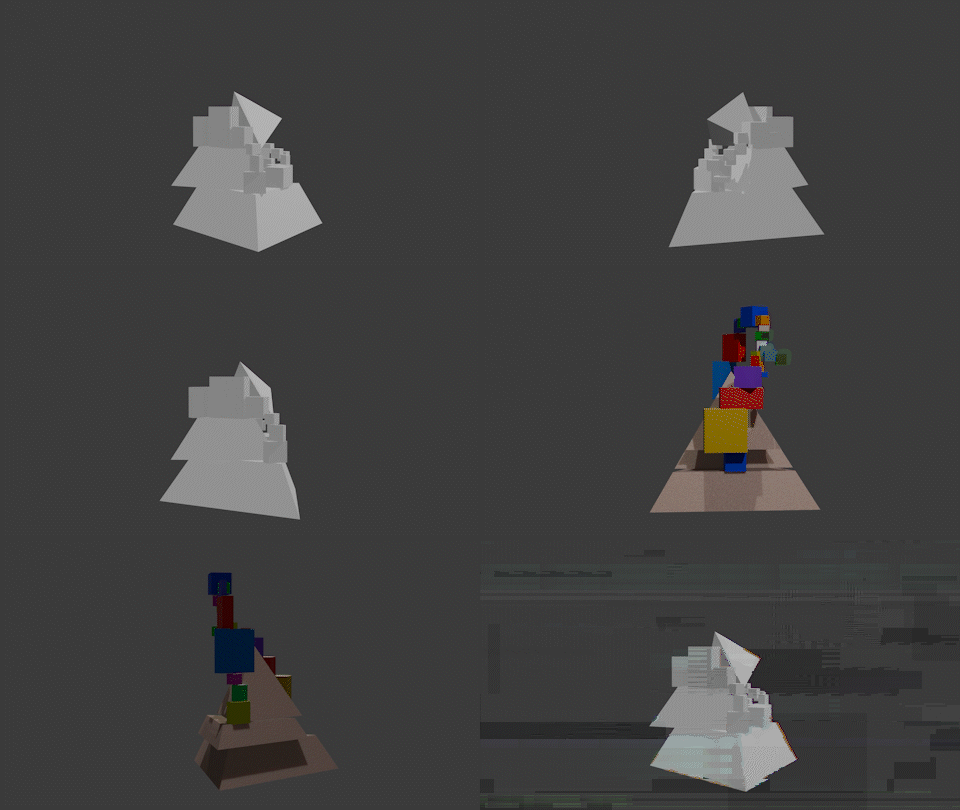
Concept Development
Blender Turntable
Fabrication
Each section was constructed from 3/16-inch HDF, reinforced internally with cross-beam supports.
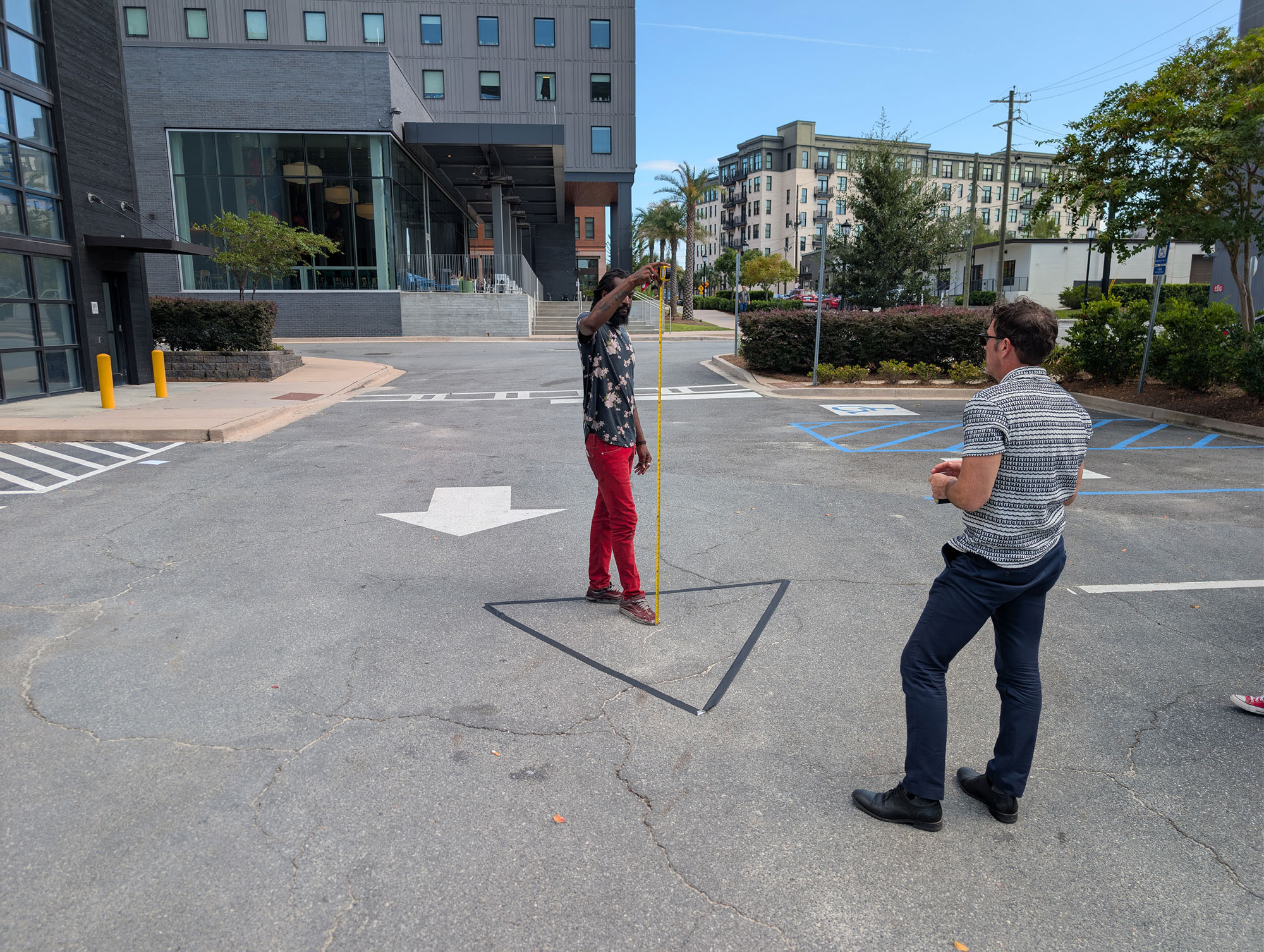
Location Scouting
Alexander Hall Parking Lot
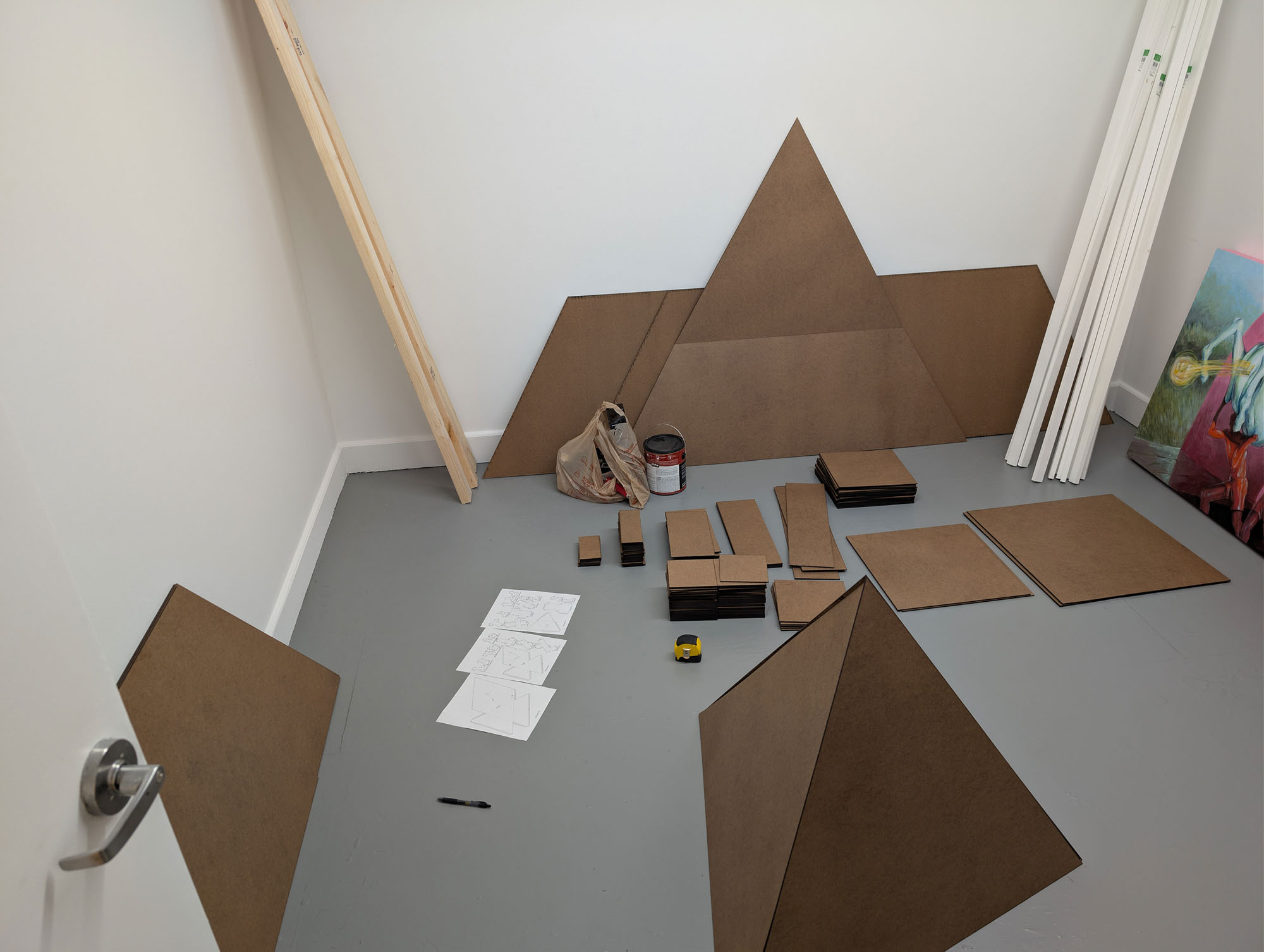
Laser Cut Fabrication Materials
Alexander Hall Lab
The three sections were fabricated independently for transport and temporary installation, then assembled into the final offset configuration on site. The entire structure was painted white to create a consistent surface for projection.
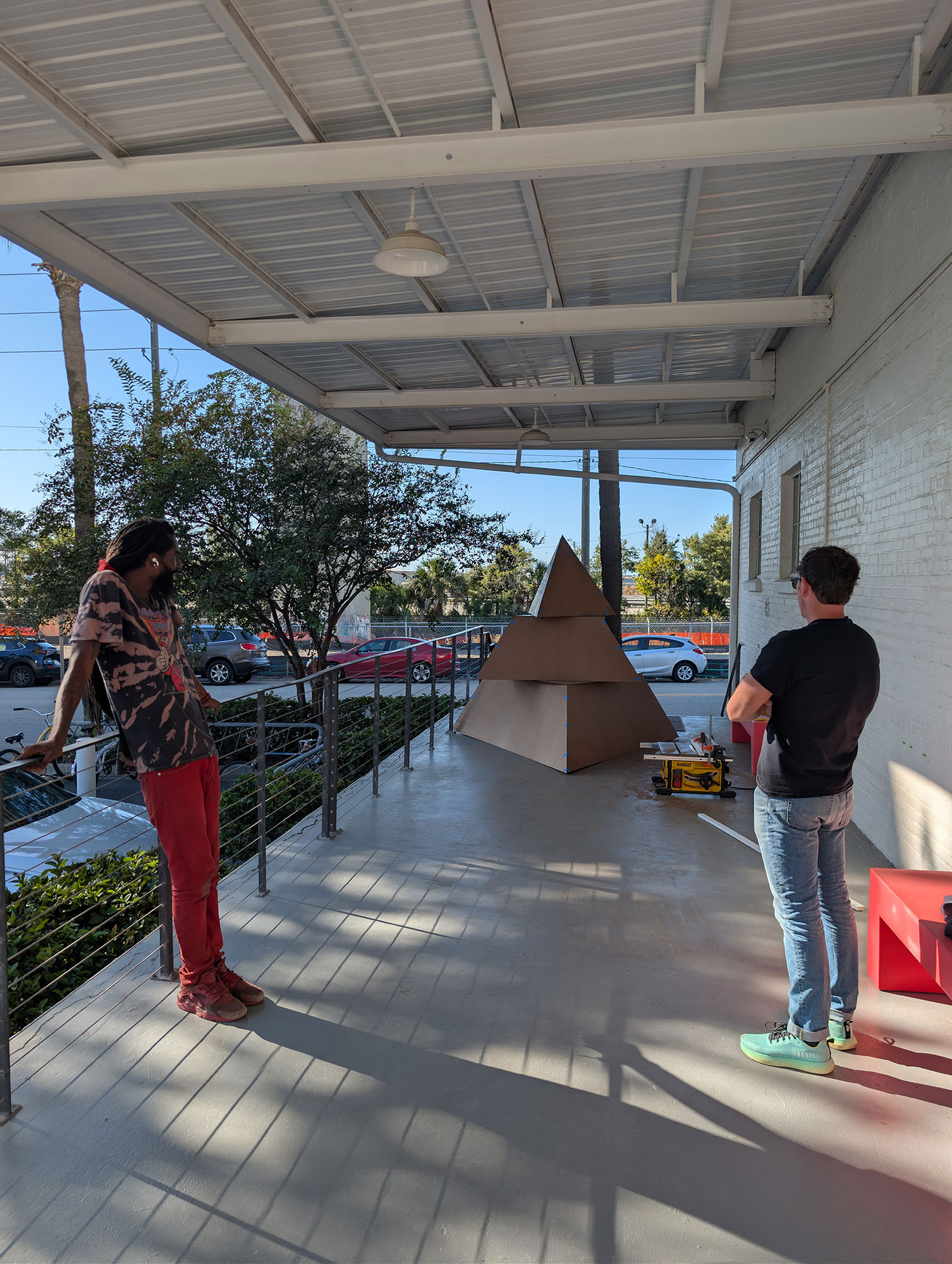
Beveling Edges
Alexander Hall Parking Lot
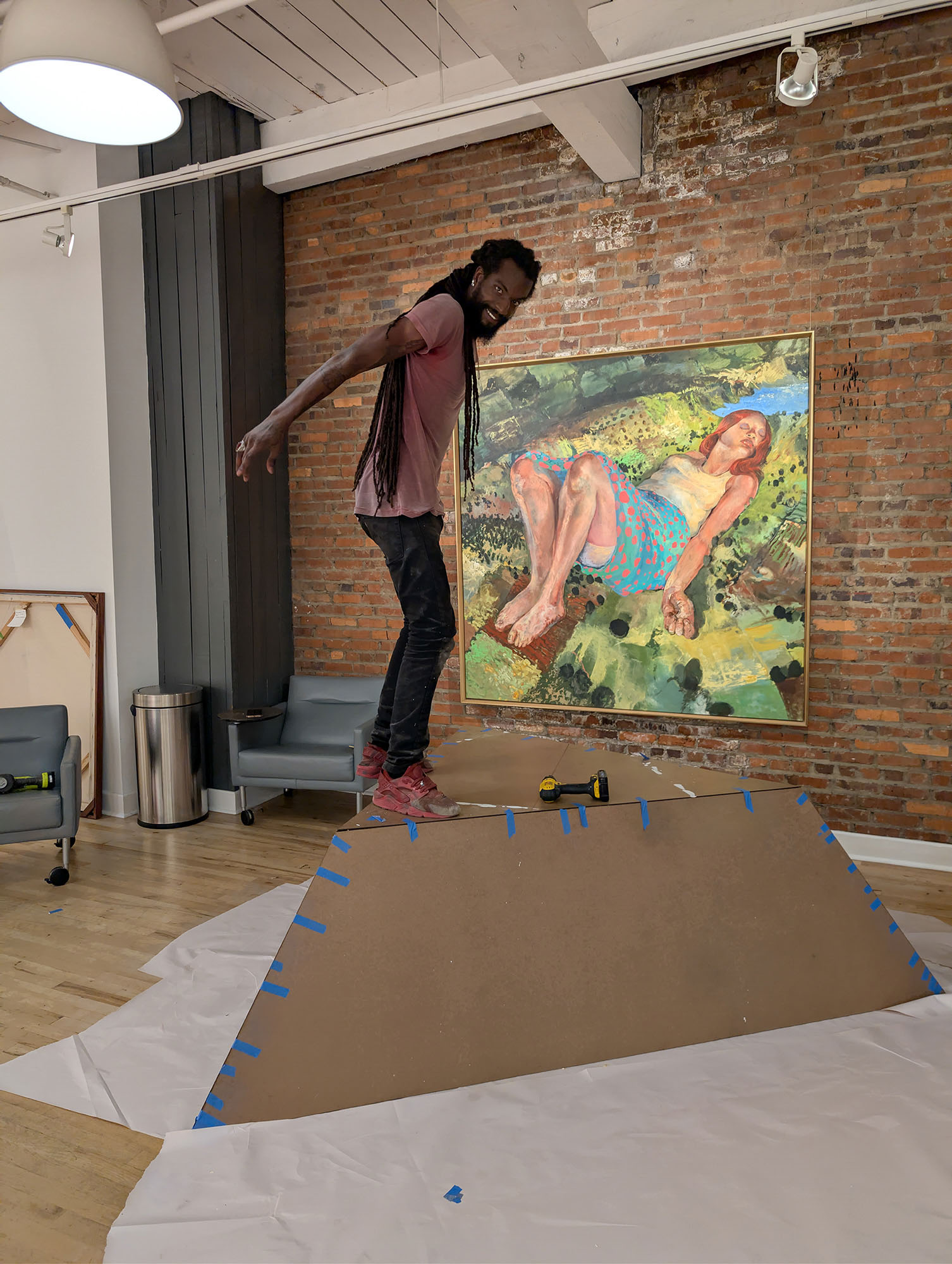
Construction Stress Test
Alexander Hall
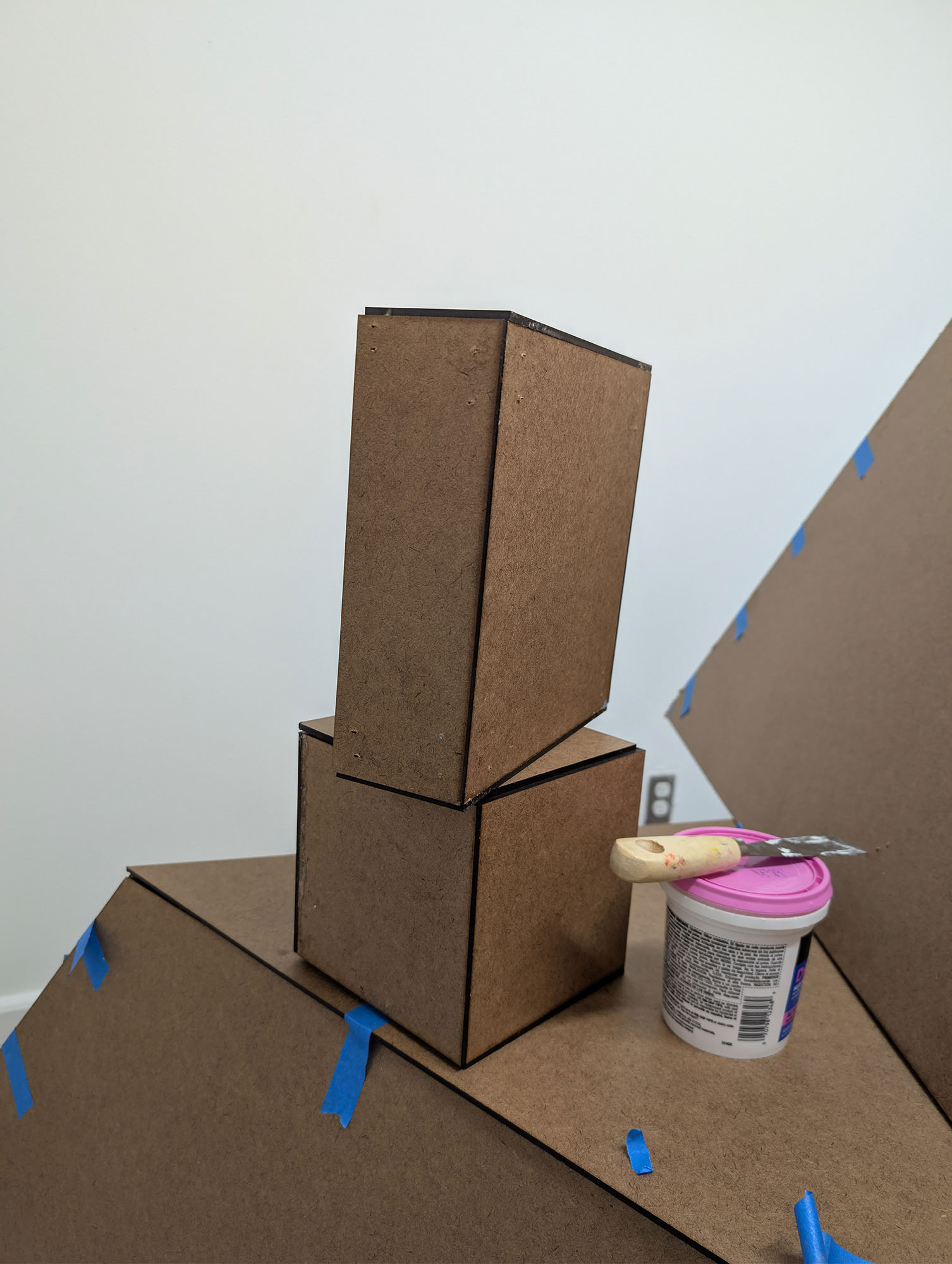
Cube Construction
Alexander Hall Lab
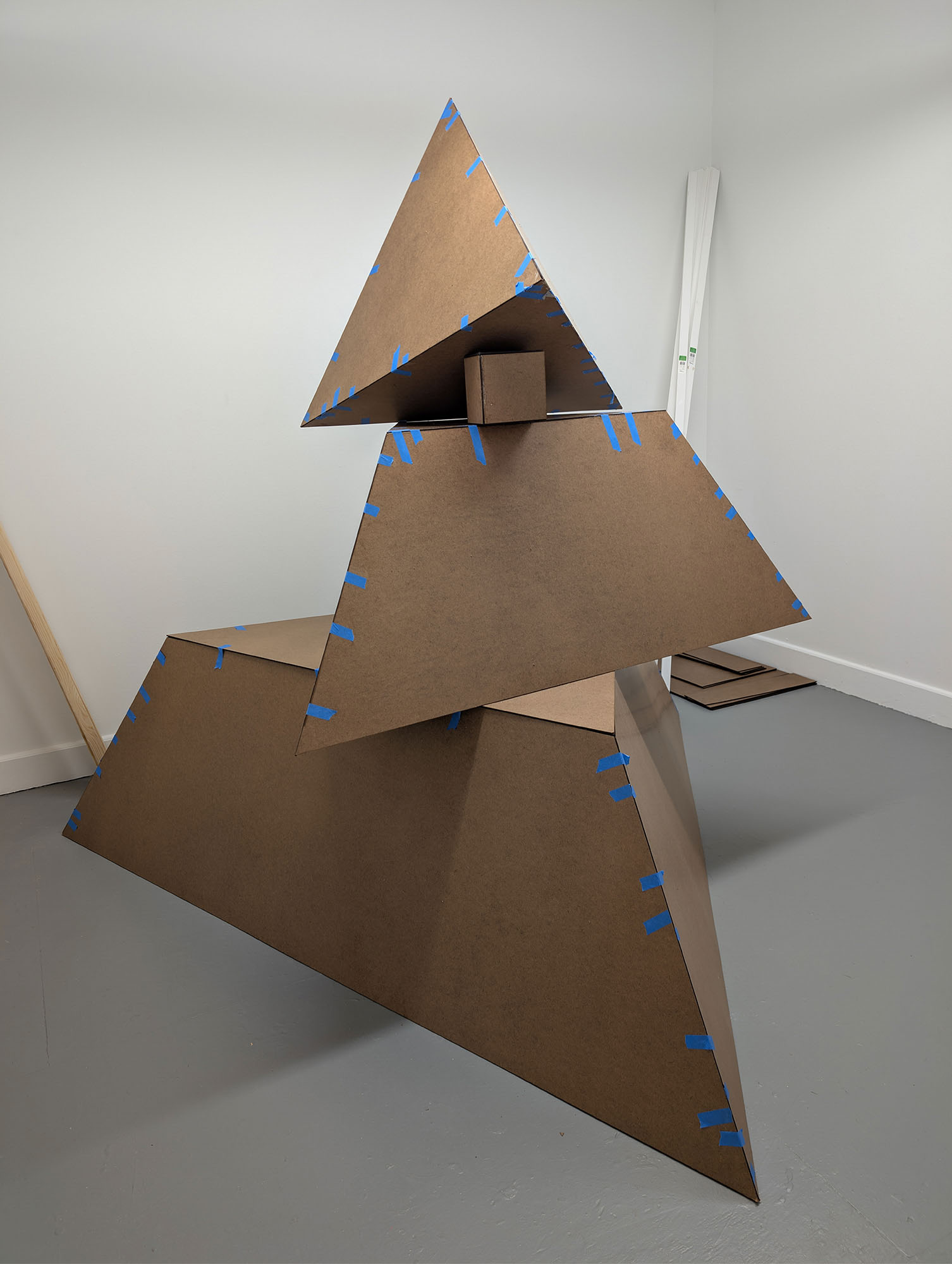
Temporary Assembly Test
Alexander Hall Lab
Projected Media
Motion media was developed specifically for the geometry of the sculpture and presented using two projectors.
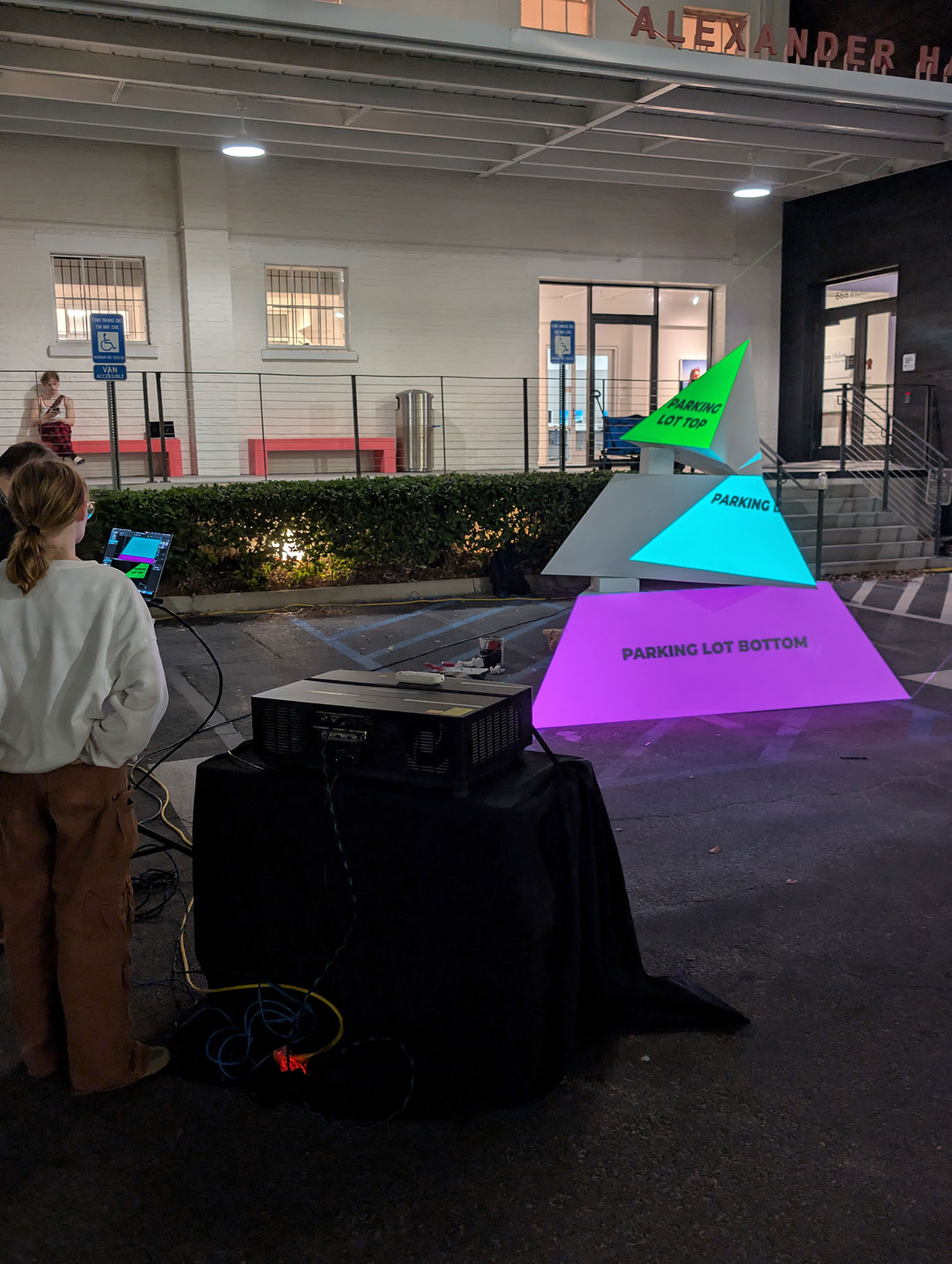
Projection Mapping - Projector One
Alexander Hall Parking Lot
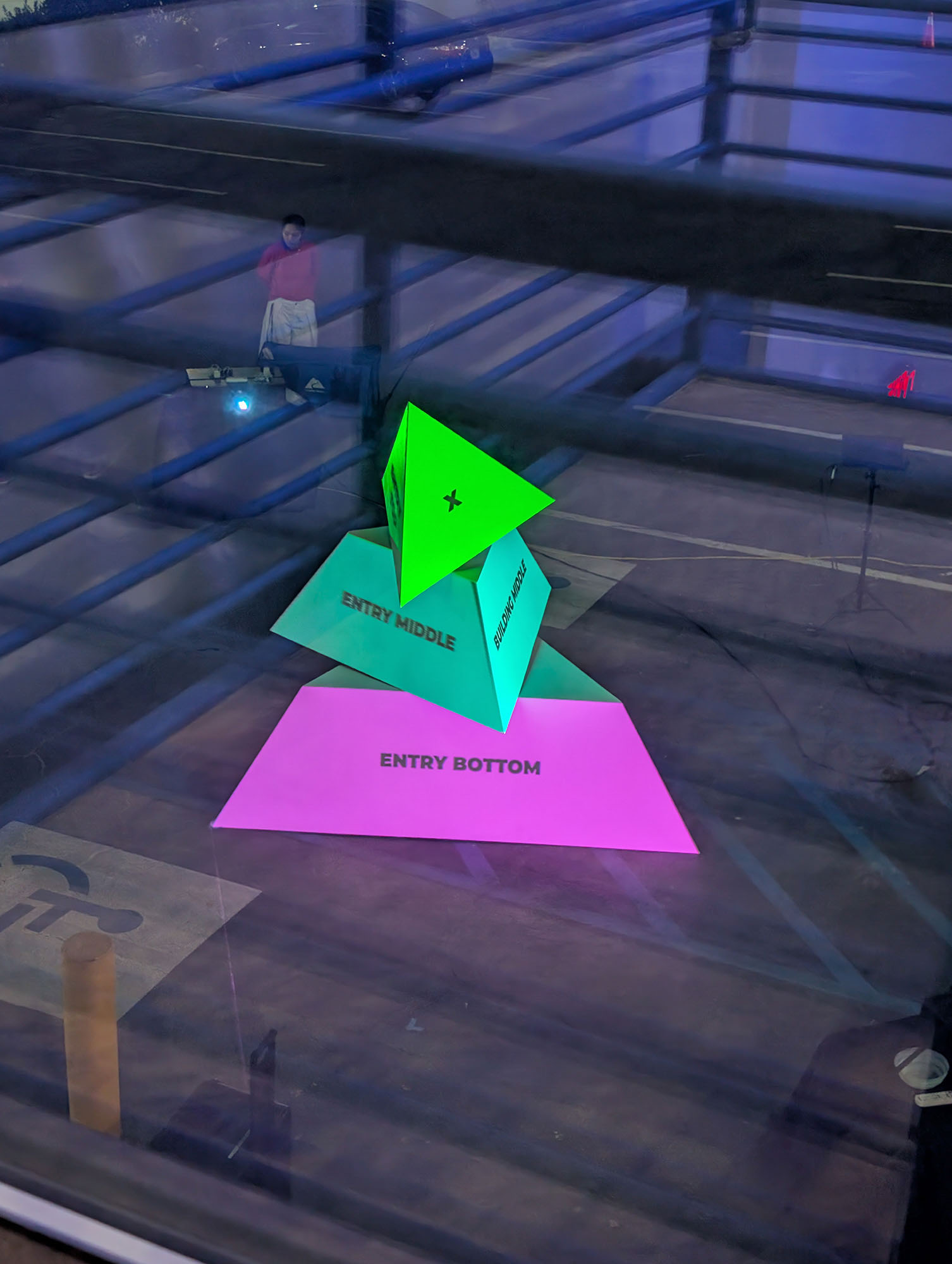
Projection Mapping - Projector Two
Alexander Hall Parking Lot
Each visible face was accounted for individually through projection mapping in MadMapper, with media prepared and composited in After Effects and Nuke. This allowed imagery to move deliberately across the rotated and tilted planes while maintaining control over how individual elements appeared on each surface.
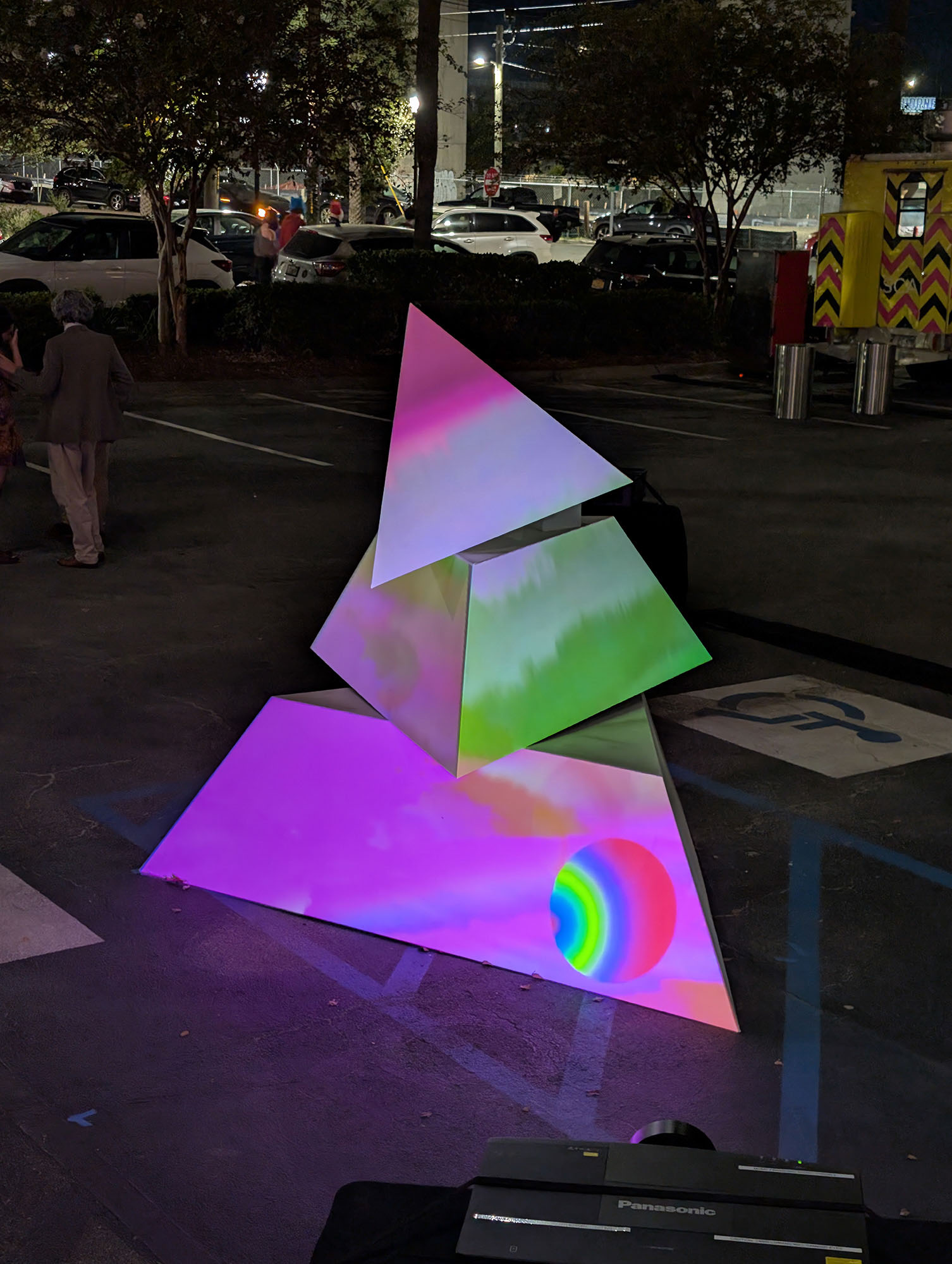
Motion Media Test
Alexander Hall Parking Lot
The projection mapping treated the fragmented structure as a single image field while also taking advantage of the different orientations, breaks, and spatial relationships between its sections.
Wackiki Fonzie 001
Projected Media
Wackiki Fonzie 002
Projected Media
Wackiki Fonzie 003
Projected Media
|||